
Pleasants Parole and Probation Compared
Parole and probation both permit a person to live in the community under rules, but they begin through different legal acts. The West Virginia Parole Board decides whether an eligible state prisoner may leave prison on parole. WVDCR Parole Services then handles field supervision. A Pleasants County judge imposes probation as part of a court sentence, and Judiciary probation staff supervise that order. A probationer may never have served a state prison term.
That distinction controls the search. A parole question belongs first with the offender record, Board material, and the Parkersburg Parole Office. A probation question belongs with the sentencing docket, the probation order, and Third Circuit staff. Community Corrections is another court-linked option, but it is not a synonym for either one.
| Point | Parole | Probation |
|---|---|---|
| How it begins | Conditional release from a state prison sentence | A sentence ordered by a court for community supervision |
| Decision maker | West Virginia Parole Board | Pleasants County sentencing court |
| Field authority | WVDCR Parole Services | West Virginia Judiciary probation staff |
| Best record | Board action, WVDCR status, and discharge action | Sentencing, revocation, and discharge orders |
- Parole
- Conditional community release before the legal end of a state prison sentence.
- Probation
- Court-ordered community supervision imposed as a sentence or part of one.
- Discharge
- An official action ending custody or supervision, not just a missing online result.
- Absconder
- A person alleged to have left supervision without authorization; the label is not a final revocation ruling.
Verify Pleasants Post-Release Supervision
Start with the legal source, not a guess based on custody. The WVDCR offender search can help identify an offender and prior facility, but its disclaimer warns that a result may not show the true current location, release date, or status. No official public person-by-person parolee lookup was found during the August 2026 research. The court record is more useful for probation because it can show the sentence and later orders.
- Identify whether the person had a Pleasants County court sentence, a state prison commitment, or both. Save the case and offender numbers.
- For parole, review the WVDCR record and the West Virginia Parole Board material. A hearing or grant is not proof of physical release.
- For probation, search the West Virginia court-record gateway, then obtain the sentencing or later discharge order from the clerk.
- Contact the correct field office and ask what public documentation can confirm current status. Staff may limit private case details.
- When an end date matters, obtain the actual discharge action. Do not infer completion from a vanished online name.
The full custody and court sequence is covered in the Pleasants County released-inmate search. It helps separate release from North Central, transfer into state custody, and later community supervision.
Important: “Not incarcerated” describes custody, not necessarily the end of parole, probation, or mandatory supervision.
Pleasants Supervision Office Routes
Pleasants County falls within WVDCR Parole Region 5. The official Parkersburg Parole Office expressly serves Pleasants. Probation is routed through the Judiciary’s Third Circuit group, which joins Pleasants with Doddridge, Ritchie, and Wirt. The live probation contact directory should be checked because staff assignments can change.
Parkersburg Parole Office
225 Holiday Hills Drive, Suite 1
Parkersburg, WV 26104
304-420-4630
Third Circuit Probation
Pleasants, Doddridge, Ritchie, and Wirt counties
Chief Probation Officer: 304-684-9441
Deputy Chief: 304-845-6951
Those phone listings were checked in August 2026. Use the office name and live directory as the durable route. Personnel can change even when the circuit assignment does not.
Three Pleasants Supervision Offices
A Pleasants supervision question can be misrouted because three systems touch the same broad subject. The Parole Board makes parole decisions and publishes hearing procedure. WVDCR Parole Services supervises a person after parole release. Judiciary staff supervise probation imposed by the court. None of those offices substitutes for the other two.
The Board’s hearing material shows why the split matters. Its panels may grant parole, grant with added conditions, defer, or deny. Yet a grant still requires processing and an approved release plan. For someone in a regional jail, the Board FAQ describes transfer to a DCR facility for intake and fingerprinting before parole release. Physical exit should therefore be checked through WVDCR status, VINE, and the release transaction.
The official hearing explanation describes monthly hearings, including onsite sessions at Saint Marys. The captured agency page shows that statewide process.
The schedule is a consideration calendar. It is not a Pleasants County release list, a decision database, or proof that a person left custody.
Pleasants Community Corrections Role
Pleasants County Community Corrections is a distinctive local court resource. The county describes a multi-county partnership that offers the judicial system a less-than-institutional-custody sentencing option for some adults, with assessment and individual programming. It may be relevant to a court case, but release alone does not establish that someone participates.
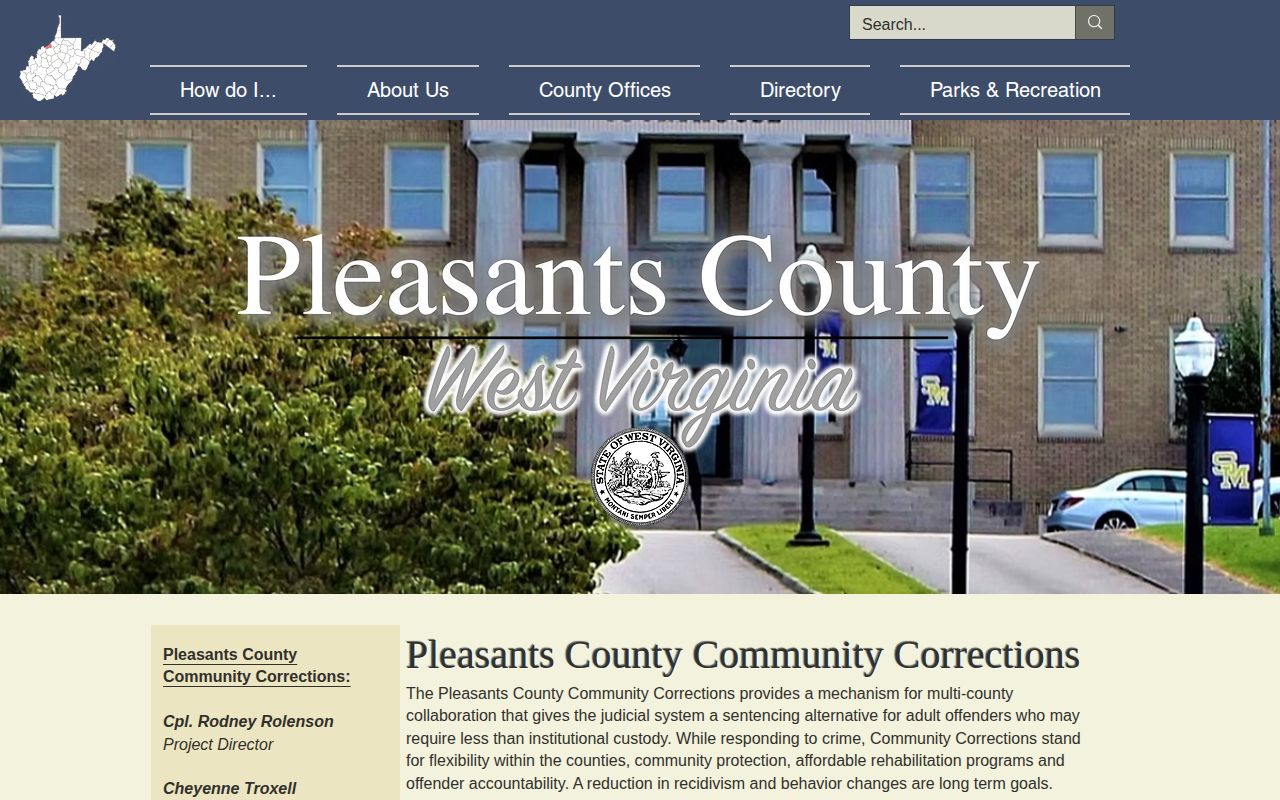
The county page is the right starting point for current program contacts. It is not a parole locator, a public participant roster, or an automatic destination after North Central release.
This local layer also shows why broad terms can mislead. Community Corrections, court probation, parole, and mandatory supervised release each arise from different authority. Read the order or WVDCR action that names the actual status.
Pleasants Supervision Violations
Conditions are the rules attached to parole or probation. An alleged breach may prompt a report, a warrant, a hearing, a changed order, or a return to custody. The exact process depends on the type of supervision and the governing order. An absconder entry means WVDCR alleges that a person left supervision without permission. It does not state the final result of a revocation case.
WVDCR maintains a separate Escapees and Absconders search. Read the label and access date exactly. Then check the court or agency action that follows. A warrant may remain unresolved even though a person is not shown in a jail’s active list. Likewise, a new detention can occur without ending the original supervision term.
VINE can provide a custody-change signal for a WVDCR inmate, but it is not a full supervision docket. The West Virginia service may delay transfer notice until arrival at the next facility. A short information gap can therefore reflect transport rather than community release.
When a violation claim involves probation, inspect the Pleasants docket for a petition, warrant, hearing entry, revocation order, or amended term. For parole, use the supervising office and WVDCR records to locate the formal action. A new arrest is not by itself the final decision on either kind of supervision. The deciding body must act under its own process, and the result may range from continued supervision to changed conditions or renewed custody.
Note: Verify an alleged violation through the supervising authority and its formal record, not through a missing roster entry or informal report.
Pleasants Parole Hearing Records
The Parole Board holds hearings monthly, but no official public name-searchable archive of all past decisions was found. Its schedule indicates expected review activity. It does not establish an outcome or an exit date. A person’s notice, any Board record released for that case, OIS or VINE status, and the WVDCR release event must be reconciled.
Under West Virginia Code §62-12-13, reaching parole eligibility creates the chance for consideration under the statute. It does not create a right to release. Specialized rules, prior convictions, offense dates, and sentence terms can alter eligibility. Avoid applying one fraction to every Pleasants County case.
A denial notice generally identifies a future reconsideration month and year while eligibility continues. A grant may still be delayed by intake, plan approval, another detainer, or records processing. Copy the Board’s outcome words exactly: grant, grant with special conditions, defer, or deny.
The Board’s researched contact is 1409 Greenbrier Street, 2nd Floor, Charleston, WV 25311, telephone 304-558-6366. Its posted hours were weekdays from 8:00 a.m. to 4:00 p.m. The FAQ says a hearing transcript requires a court order. It also describes a written request route for an inmate, parolee, or representative to seek audio, with a posted fee and response estimate. Recheck all administrative terms before requesting because prices, processing times, and office details can change.
Pleasants Supervision Discharge Records
Supervision ends through an official action. For probation, locate the sentencing order and any later discharge or revocation order in the Pleasants court file. For parole, seek the WVDCR or Board record that confirms discharge. A person may be physically free from a facility for years while still on parole, so elapsed time alone cannot prove completion.
Early parole discharge is not automatic after one successful year. West Virginia Code §62-12-18 provides a request and decision process under stated conditions, with different timing for some life sentences. The record of the decision matters. Mandatory supervision can also continue after physical release because the person remains under legal control for the statutory period.
A discharge check should include the person’s offender number, the kind of supervision, the field office, and the date of the most recent official action. If the sentencing court imposed probation after a jail stay, ask the Pleasants clerk for the probation and discharge orders. If WVDCR supervised parole, request the agency action that ended it. This prevents a court probation record from being mistaken for a Parole Board record.
If records disagree, note each source and its retrieval date. Court orders explain legal authority. WVDCR records show institutional and parole status. The field office can route a request for public confirmation. No single missing result should be promoted into a final conclusion.